Album Reviews
Animal Collective
Animal Collective
If Animal Collective’s songs were an intricate machine, then Live at 9:30 would be the deconstruction and spreading out of their complex parts. Formed in Baltimore, Maryland by Avey Tare (David Portner), Panda Bear (Noah Lennox), Deakin (Josh Dibb), and Geologist (Brian Weitz), Animal Collective genre-hops like frogs in a whimsical rainforest.
Live at 9:30 is recorded from Animal Collective’s June 12, 2013 show of a sold out three night run at the Washington D.C.’s historic venue, 9:30. It features songs from albums, EPs, and singles dating back to Animal Collective’s earliest days (their career spans 15 years so far!), including Feels (2005), Strawberry Jam (2007), Fall Be Kind (2009), Merriweather Post Pavillion (2009), Centipede Hz (2012), and the single “Honeycomb,” also released in 2012.
“Animal Collective genre-hops like frogs in a whimsical rainforest.”
In this live album, Animal Collective manages to stretch the slow builds right into the frantic heart of each song. The tracks dwindle with just as much intensity as they came, giving us time to bathe in their psychedelic soundbaths (or recover from them.) Many fans came on the scene after Animal Collective released their synth-speckled, electropop album Merriweather Post Pavillion, which received commercial success, hitting #13 on The Billboard 200 in 2009.
“Amanita,” the first track of Live at 9:30, is a good four minutes longer than the recorded version on Centipede Hz. In the recorded version of this track, the fast-paced bongos contribute to the frantic self-doubt and exasperation in the lyrics, and I craved this same hasty frustration on this live album. “Amanita-Live” felt more like a tame trance with its sparse percussion.
Whereas the studio version of “Did You See the Words,” feels like a savory celebration, the second track of the live version is more of a lament. Though they sound more tortured and submerged in the emotionality of the lyrics, Animal Collective doesn’t lose the precision of hitting all of the song’s meandering notes and idiosyncracies. Though the track is missing some of its pop gusto with the glittering piano, Animal Collective isn’t afraid to get raw and gritty.
“Each song follows its own cycle of birth and death.”
For those fans who’ve been with AC since their early days, I think it’s safe to say that their performance stays true to their far out there, experimental, eclectic tribal roots in Live at 9:30, striking a palatable balance. This ‘far out’ performance is not without prompting or warning. By the end of “Moonjock,” they take a break and talk to the audience a bit, asking fans, “Is everybody cool to go out there? You wanna just go out there? Hope so.” The fans’ cheers suggest a seal of approval.
In “New Town Burnout” they take the audience’s permission to heart (not that they really had a choice) and get super weird. They get into the first verse sounding like aliens having just landed on earth. They mumble incoherent words into the mic, sounding as though its their first day on earth.
What I think is most incredible about Live at 9:30, and Animal Collective in general, is their ability to create intricate worlds as songs that could exist as separate entities, yet always somehow tie back into one another. Each song follows its own cycle of birth and death. What this performance never fails to maintain is the feeling of anticipation in the slow builds, the swelling into a full-fledged funhouse panic attack, and the inevitable exhaustion as the tracks fade into their own embers. This chaotic rollercoaster is what makes Animal Collective’s emotional affectibility even more poignant.
Live at 9:30 is available as a limited edition hand-numbered 3xLP boxset to purchase online exclusively from Animal Collective or Domino. All orders receive an instant download of the entire release and ship immediately.
There’s also a brand new Animal Collective website at myanimalhome.net, which fulfills their psychedelic sonic-scape in visual form.
In addition to their new live album, Panda Bear of Animal Collective released his fifth studio album Panda Bear Meets the Grim Reaper and accompanying Crosswords EP and Mr Noah EP this past year. Avey Tare of Animal Collective formed a new band Avey Tare’s Slasher Flicks last year, which saw the release of their debut studio album, Enter the Slasher House. at 9:30
Bad Self Portraits
by Lake Street Dive
published on Giantstep.net
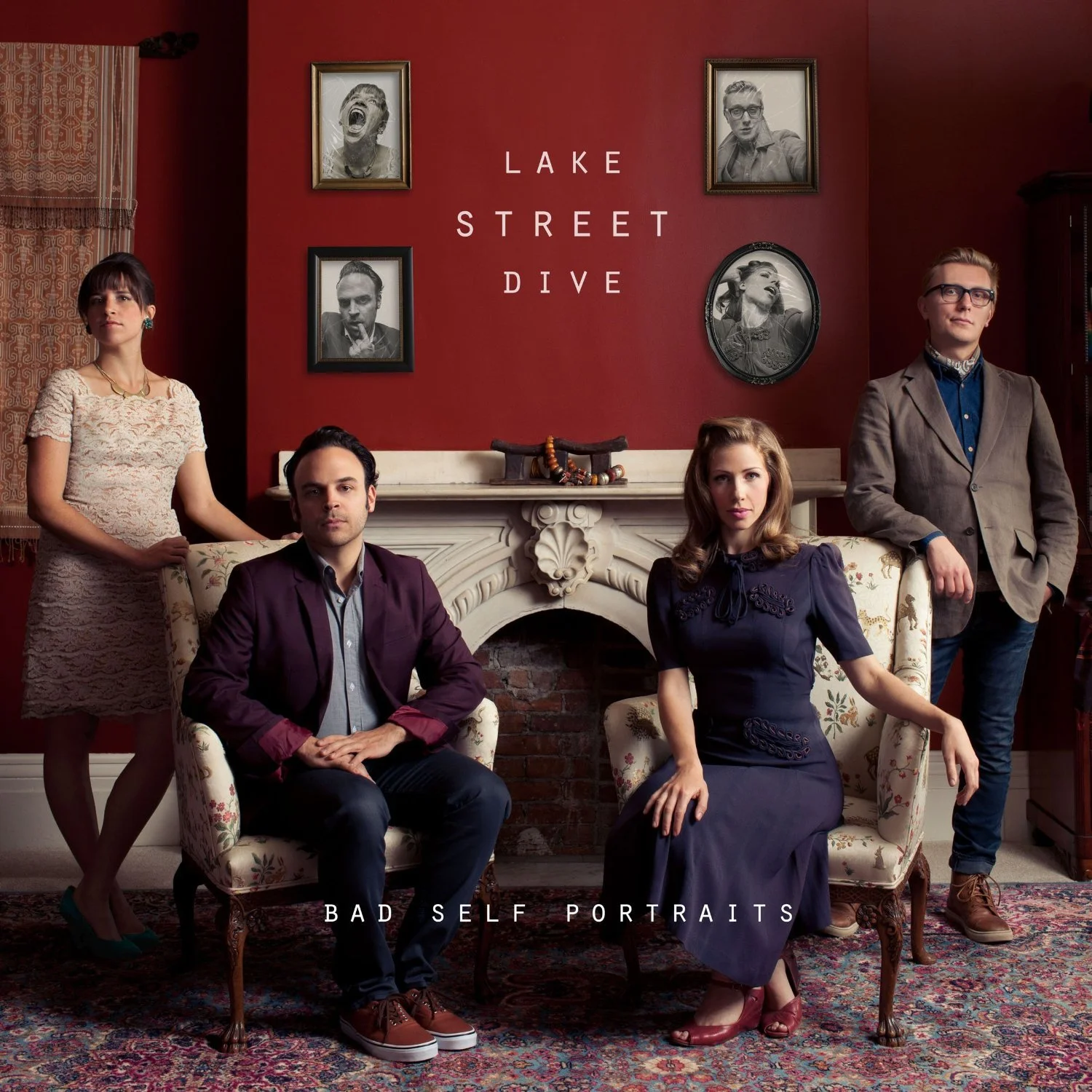
In this dangerously charming medley of pop rock, soul, and folk jazz, Lake Street Dive concocts a spirited brew of love's fruits and afflictions. Bad Self Portraits is the band’s second full-length album after their 2011 self-titled debut and their 2012 EP, Fun Machine, a collection of cover songs.
It must be said that when encountering Lake Street Dive for the first time, Rachael Price’s distinct jazz vocal stands out immediately. Timeless and almost overpowering at first, her vocal performance is rich with conviction and a fiery pizazz which makes it impossible to take your eyes off of her.
Bad Self Portraits appeals to our untamed, feisty sides with uptempo pulses and pop-heavy shimmy shakes. In their first ever TV performance on The Colbert Report, Stephen Colbert describes Lake Street Dive as a mix of “pop, jazz, and swing with a little bit of bluegrass.” While spritely, Bad Self Portraits also caters to our weary, love-ridden souls with its ooos and ahhhs, occasionally exhaling into bluesy, contemplative sighs.
The title track “Bad Self Portraits” depicts an ex lover who makes the most of her recent purchase of a camera which she bought to take pictures of [her] love. Rachael Price, lead vocalist of Lake Street Dive, satirizes her loneliness through a newfound self possession. With staccato percussion and open vocal phrases, she sings: Gone are the days of me being so reticent/ I’m taking landscapes/ I’m taking still lifes/ I’m taking bad self portraits of a lonely woman. The lyrics kill two birds with one stone; they’re self deprecating and nostalgic of a time when the character didn’t spend moments alone with these new activities, yet proud of her newfound independence.
In searching for lines to transcribe for the sake of bolstering the album’s themes on love, I found myself wanting to write down most of Lake Street Dive’s lyrics. They seem to master the art of metaphor, comparing the allures and chemical alterations of love to alcoholic addictions in “You Go Down Smooth.”
This track somehow grows more and more catchy even after several dozen listens, as do most of these songs. And so Rachael coos: I’m afraid to need you so/ and I’m too sober not to know that you may be my problem not my love/ Would it be true to say you go to my head? Rachael’s repetition of You go down smooooooth is in and of itself an intoxication as her vibrato swings from one chord progression to another. Check out how well Rachael’s vocals, the upright bass, guitar, and percussion compliment one another in their performance on the Showtime documentary, Another Day Another Time, a concert inspired by the Coen Brothers’ film, 'Inside Llewyn Davis'.
As a nice hiatus from the previous uptempo tracks, “Better Than” is a slow groove of reflection, consideration, and resoluteness. Whether Rachael is singing from her own experience or someone else’s, perhaps fictional, is unimportant because her wise and weary tone places us in her psyche as she weighs what she could or could not do, think or not think, feel or not feel. It’s a song that could play at a dive bar toward last call while the bartender stacks chairs on the tables, two friends drunkenly sharing an intimate conversation.
“Just Ask” is perhaps the track that spells out the theme of Bad Self Portraits the most candidly. Rachael sings: Love’s an addiction baby, there’s a rehab for every kind. Resembling doo-wop blues and gospel in its heavy background vocals, repetition of baby, and organ, Lake Street Dive takes this track as another opportunity to catch up to itself. It’s captivating in its declarations: Sunlight is a villain when it takes away the night/ And you’re about the same baby/ when you tell me you’re alright. This sophisticated line encapsulates their craft of layering metaphors, as it requires a double listen to glean a back story.
Saudade
by Thievery Corporation
published on GiantStep.net
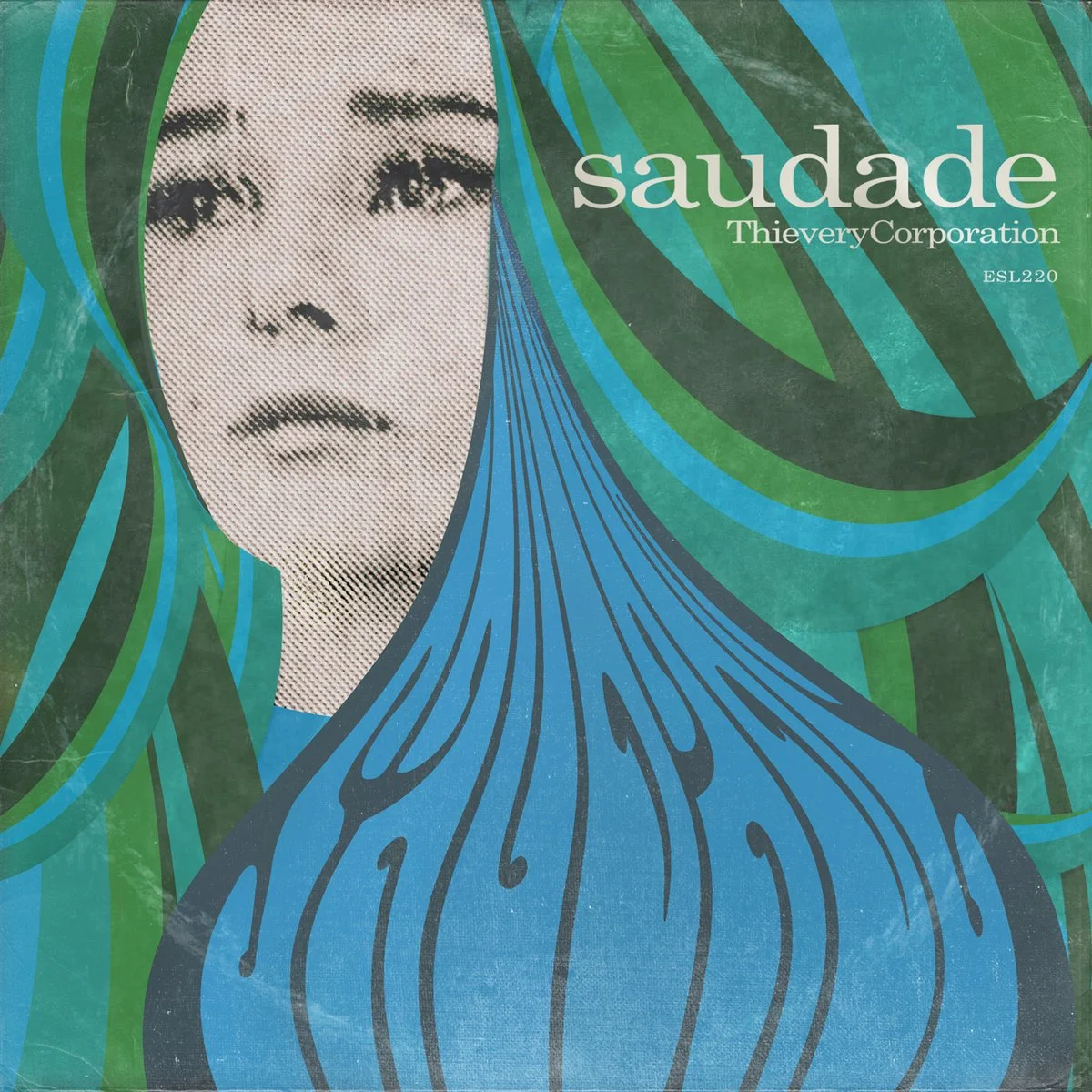
Comprised mainly of Rob Garza and Eric Hilton, Thievery Corporation bonded over their shared love of samba-blended beachside jazz when they met in the mid 1990s. The duo describes Saudade as sort of both a homecoming and a departure: “these are our roots, this is what brought us together. It’s us coming full circle from electronic music back to something organic before we move on to our next chapter.” (http://thieverycorporation.com/bio).
Saudade perhaps pays homage to “Chega de Saudade,” the first bossa nova song composed by Antonio Carlos Jobim, performed first by Elizete Cardoso and made famous by João Gilberto. The album title translates, in many different languages, to a universal expression of nostalgia, grief, loss, and fulfillment: a melancholic melange of emotions to be relished. Thievery Corporation captures this sudden paradox of feelings in Saudade.
It’s dusk. The sun sits on the skyline and its glow radiates on the water. You watch the sun sink into the horizon from your chair as you tap your strappy tan heels on the restaurant’s cobble stone. The bartender hands you a Caipirinha and you sip it slow, drumming your fingertips on the glass, still looking at the sunset.
You stand up and close your eyes, start to sway--maybe because you’re tipsy, but mostly because “Decollage” by Thievery Corporation has just come on. It streams into the outdoor space like a soft rain and you can’t help but drift with it. You let the gentle French phrases by Lou Lou Ghelichkani, the humidity, and the sweet drink carry you into a calming trance as you glide past the gleaming bodies to the dance floor.
Thievery Corporation’s Saudade has the power to transport you here. To a Brazilian city you may have never been to, yet may feel more comforting than anywhere you’ve ever been or dreamt of. Saudade’s strings and Latin claves blend with the gentle hum of the restaurant; the clinking of wine glasses and plates combine to create a spontaneous live accompaniment. And that drink in your hand, the Caipirinha, is one of Brazil’s cultural symbols. It is constantly being reinvented with varying ingredients. Just as the sum of its parts can morph into something new yet preserve its authenticity, so too can Thievery Corporation’s blended sound revisit its first love in Saudade: bossa nova.